Controlling Nissan's continuously variable valve timing...
Posted: Mon Jul 17, 2006 7:15 am
Hello,
I'm using MSII and EDIS6 for engine control on my 2003 Nissan Maxima motor (equal to 350z motor). It has solenoids to control the intake cam's angle by oil pressure. I'm looking into how to control these solenoids with MSII and another post about BMW's VANOS system seems to say it's possible.
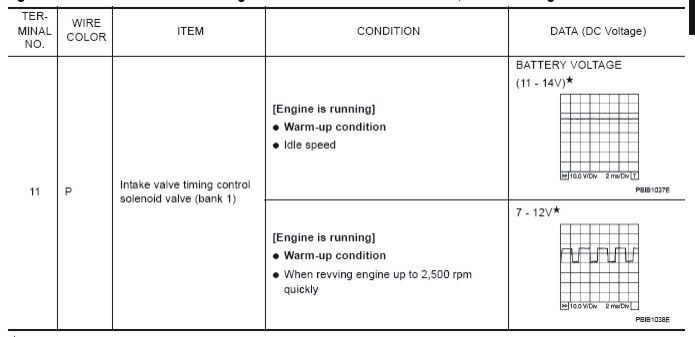
Here's a passage from the factory service manual about it's opperation. How should I begin testing one of these (I have access to spares to test off of the car if needed).
What part of MegaTune is used to control these?
thanks
allen
I'm using MSII and EDIS6 for engine control on my 2003 Nissan Maxima motor (equal to 350z motor). It has solenoids to control the intake cam's angle by oil pressure. I'm looking into how to control these solenoids with MSII and another post about BMW's VANOS system seems to say it's possible.
Here's a passage from the factory service manual about it's opperation. How should I begin testing one of these (I have access to spares to test off of the car if needed).
What part of MegaTune is used to control these?
Here's another passage:This mechanism hydraulically controls cam phases continuously with the fixed operating angle of the intake
valve.
The ECM receives signals such as crankshaft position, camshaft position, engine speed, and engine coolant
temperature. Then, the ECM sends ON/OFF pulse duty signals to the intake valve timing control solenoid
valve depending on driving status. This makes it possible to control the shut/open timing of the intake valve to
increase engine torque in low/mid speed range and output in high-speed range.
And here's a snapshot of a scope diagram:Intake valve timing control solenoid valve is activated by ON/OFF
pulse duty (ratio) signals from the ECM.
The intake valve timing control solenoid valve changes the oil
amount and direction of flow through intake valve timing control unit
or stops oil flow.
The longer pulse width advances valve angle.
The shorter pulse width retards valve angle.
When ON and OFF pulse widths become equal, the solenoid valve
stops oil pressure flow to fix the intake valve angle at the control
position.
thanks
allen